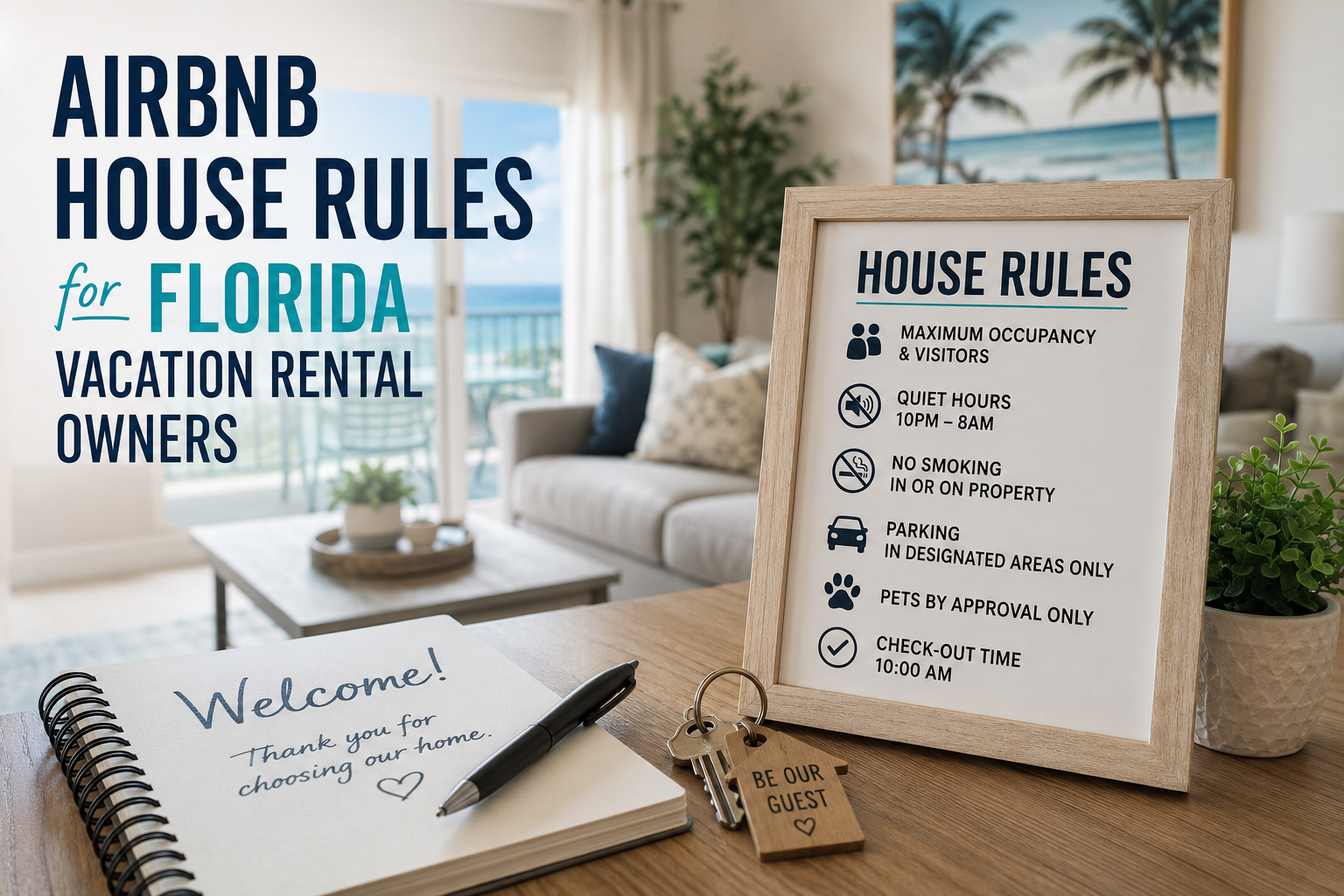
Clear Airbnb house rules protect your Florida vacation rental and help guests understand what is expected during their stay. They can prevent confusion about visitors, parking, noise, smoking, pets, checkout, and property use.
Rules are especially important for rentals in condos, coastal communities, and neighborhoods with homeowners associations. Guests may need to follow building policies, pool rules, parking restrictions, quiet hours, and local requirements.
The best house rules are clear, reasonable, and easy to follow.
Why Airbnb House Rules Matter
Guests cannot follow rules they do not know about. Sharing expectations before booking allows travelers to decide whether the property is right for them.
Clear rules can help:
- Prevent unauthorized parties and guests
- Reduce noise complaints
- Protect furniture, appliances, and amenities
- Keep parking areas organized
- Explain pool, balcony, and waterfront safety
- Create smoother check-in and checkout procedures
- Maintain consistent property standards
Your Airbnb listing, rental agreement, arrival instructions, and welcome guide should provide consistent information. Conflicting instructions can confuse guests and make problems harder to address.
Review Local and Community Requirements
Before writing your rules, review the requirements that apply to your property. These may vary by city, county, condo association, homeowners association, or building.
Florida vacation rental owners may need to consider:
- Maximum occupancy
- Minimum rental periods
- Local noise ordinances
- Parking limitations
- Trash collection procedures
- Pool and common-area rules
- Balcony and grilling restrictions
- Registration or licensing requirements
Condo associations may limit parking passes, restrict pool hours, prohibit towels on balcony railings, or require guests to register before arrival. Communicate these requirements clearly before check-in.
Because regulations can change, confirm current information with the appropriate city, county, association, or qualified professional.
Essential Airbnb House Rules
Maximum Occupancy and Visitors
State the maximum number of overnight guests allowed. Explain whether daytime visitors are permitted and whether they need advance approval.
Avoid vague statements such as “no extra guests.” Guests should know exactly who may enter or stay at the property.
Parties and Events
Clearly state whether parties, events, and large gatherings are prohibited.
This is especially important for condos and rentals near full-time residents. Unauthorized gatherings can lead to noise complaints, parking issues, property damage, and problems with neighbors or the association.
Quiet Hours
Provide exact quiet hours based on local or community requirements.
Remind guests that sound travels through balconies, hallways, shared walls, and outdoor areas. Quiet-hour rules may apply to music, televisions, outdoor speakers, conversations, and activity in common areas.
Smoking and Vaping
Explain where smoking and vaping are prohibited. Specify whether the rule applies inside the rental, on balconies, on patios, in garages, or throughout the property.
If the building has a designated smoking area, tell guests where it is and how smoking materials should be safely discarded.
Pets and Service Animals
Explain whether pets are allowed, how many are permitted, and whether a fee applies. Include rules for leashes, waste cleanup, furniture, shared areas, and leaving pets unattended.
Service animals should be addressed separately from pets. Policies should follow applicable requirements and the booking platform’s accessibility guidelines.
Parking
Tell guests:
- How many vehicles are permitted
- Where they may park
- Whether passes are required
- Where overflow parking is located
- Whether trailers, boats, or oversized vehicles are prohibited
A simple parking map can help when assigned spaces are difficult to locate. Guests should also know where to return passes at checkout and whether unauthorized vehicles may be towed.
Pool, Balcony, and Waterfront Safety
Create rules based on the features of your property. These may include:
- Adult supervision for children
- No glass near the pool
- Pool hours and guest limits
- No diving or running
- Safe use of balconies and railings
- Rules for docks, canals, and waterfront areas
- Restrictions on grills and open flames
Guests should also receive emergency contact information and know where safety equipment is located.
Air Conditioning, Doors, and Windows
Florida heat and humidity can place added strain on air-conditioning systems. Ask guests to keep exterior doors and windows closed while the air conditioner is running.
Provide a reasonable thermostat range and clear instructions for reporting problems. Guests should contact the owner or property manager rather than attempt to repair unfamiliar equipment.
Routine vacation rental property checks in Pinellas County can help identify air-conditioning problems, leaks, moisture, open windows, appliance issues, and security concerns between stays.
Check-In and Checkout
List exact check-in and checkout times. Explain how guests will receive access instructions and who they should contact if they cannot enter the property.
Keep checkout tasks simple. Guests may be asked to:
- Place trash in the correct container
- Load or start the dishwasher
- Return keys and parking passes
- Lock doors and windows
- Report damage or maintenance concerns
Avoid giving guests a long cleaning checklist when they have already paid a cleaning fee. Professional vacation rental property cleaning in Pinellas County can prepare kitchens, bathrooms, bedrooms, and living spaces for the next arrival.
Damage and Maintenance Reporting
Ask guests to report damage and maintenance concerns promptly. Small leaks, unusual air-conditioning sounds, broken appliances, and damaged doors can become more serious when ignored.
Use helpful language and provide a clear contact method. Guests should know which issues require immediate attention, including:
- Water leaks
- Loss of air conditioning
- Electrical problems
- Security concerns
- Entry or lock problems
Photos may help the owner or property manager understand the issue and arrange the correct service.
Where to Display House Rules
Do not hide important rules in one long message. Display them in several places, including:
- The Airbnb listing
- Booking terms
- The rental agreement
- Pre-arrival messages
- A printed or digital welcome guide
- Signs near parking, pools, balconies, or trash areas
Use consistent wording everywhere. The full rules should be available before booking, while shorter reminders can be placed where guests need them.
Avoid covering the rental with warning signs. Focus on rules that protect guests, neighbors, and the property.
Make Your Rules Easy to Follow
Use simple language and specific instructions. Include exact times, locations, guest limits, and parking details whenever possible.
Place the most important rules first, including occupancy, parties, smoking, parking, quiet hours, pets, and safety.
Review the rules when:
- The property or its amenities change
- The association updates its policies
- Guests repeatedly misunderstand an instruction
- A complaint or safety concern occurs
- Local requirements are updated
How Professional Vacation Rental Services Help
House rules are only one part of caring for a Florida vacation rental. Owners must also coordinate cleaning, inspect the property, prepare for arrivals, and respond to maintenance concerns.
West Coast Property Services provides vacation rental property management, professional cleaning, and routine property checks across Florida’s Gulf Coast.
Property owners receive support from an experienced property manager and a vetted team of trained, uniformed professionals. This can be especially valuable for owners who live in another state or country or only visit Florida seasonally.
Professional cleaning helps keep rentals fresh and ready for arriving guests. Routine property checks can uncover leaks, open windows, moisture, appliance problems, damage, and security issues before they become more expensive.
Protect Your Rental With Clear Rules
A long list of harsh rules may discourage responsible guests without preventing careless behavior. Focus on the requirements that matter most for your property, neighbors, and community.
Use clear language, exact times, and specific instructions. When house rules are supported by dependable property management, cleaning, and routine property checks, owners can better protect their investment while providing a welcoming guest experience.
For reliable local support, contact West Coast Property Services to learn more about professional property management, cleaning, and property check services for your Florida vacation rental.